Northwall Road Rewilding Project
Consultation has concluded
Background
In autumn 2023, the Lee Valley Regional Park Authority (LVRPA) and London Legacy Development Corporation (LLDC) began a joint project to develop a design strategy for the rewilding of Northwall Road. Located between the Lee Valley VeloPark and the A12, the road was constructed to serve vehicular traffic during the London 2012 Olympic and Paralympic Games - but this is no longer needed. A key objective of the project was to reduce hard standings along the route and enhance biodiversity with the aim of returning much of the space to nature, alongside enhancing safe walking and cycling routes.
Following a public consultation, a series of concept design options were developed to guide the future transformation. In spring 2024, the draft concepts were shared with the Greater London Authority (GLA) to inform and finalise the overarching design strategy for Northwall Road. This collaborative review ensured that the proposed improvements aligned with regional planning priorities as well as the thoughts of the local community.
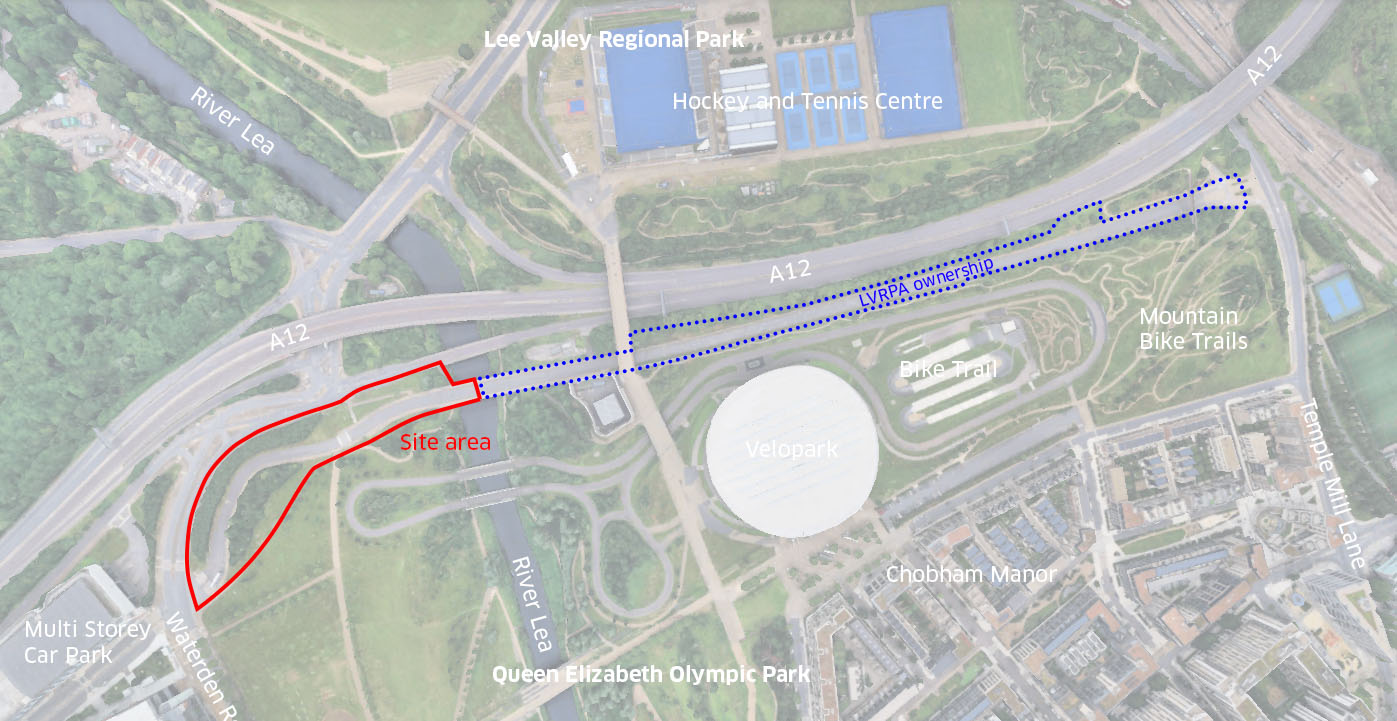 Figure: Site areaIn summer 2025, a phased delivery strategy was agreed upon, enabling the project to move forward in a way that respects the current landownership boundaries of the LLDC and LVRPA. LLDC commissioned Land Use Consultants (LUC), an environmental and planning consultancy focused on creating positive, sustainable outcomes for nature, people and places, to prepare a detailed design for the section of Northwall Road within their ownership, stretching from Waterden Road to the River Lea. This phase focuses on strengthening the route’s role as a key connection within Queen Elizabeth Olympic Park and enhancing its overall integration with the surrounding landscape.
The overarching vision for Northwall Road is to relink this space to the wider open space network, identifying opportunities to connect with and extend the surrounding open spaces into the road corridor. Central to this vision, is the improvement of the existing pedestrian and cycle network, with clearer legibility, stronger wayfinding, improved accessibility and sense of safety, and enhanced connections to the area’s strategic north–south routes.
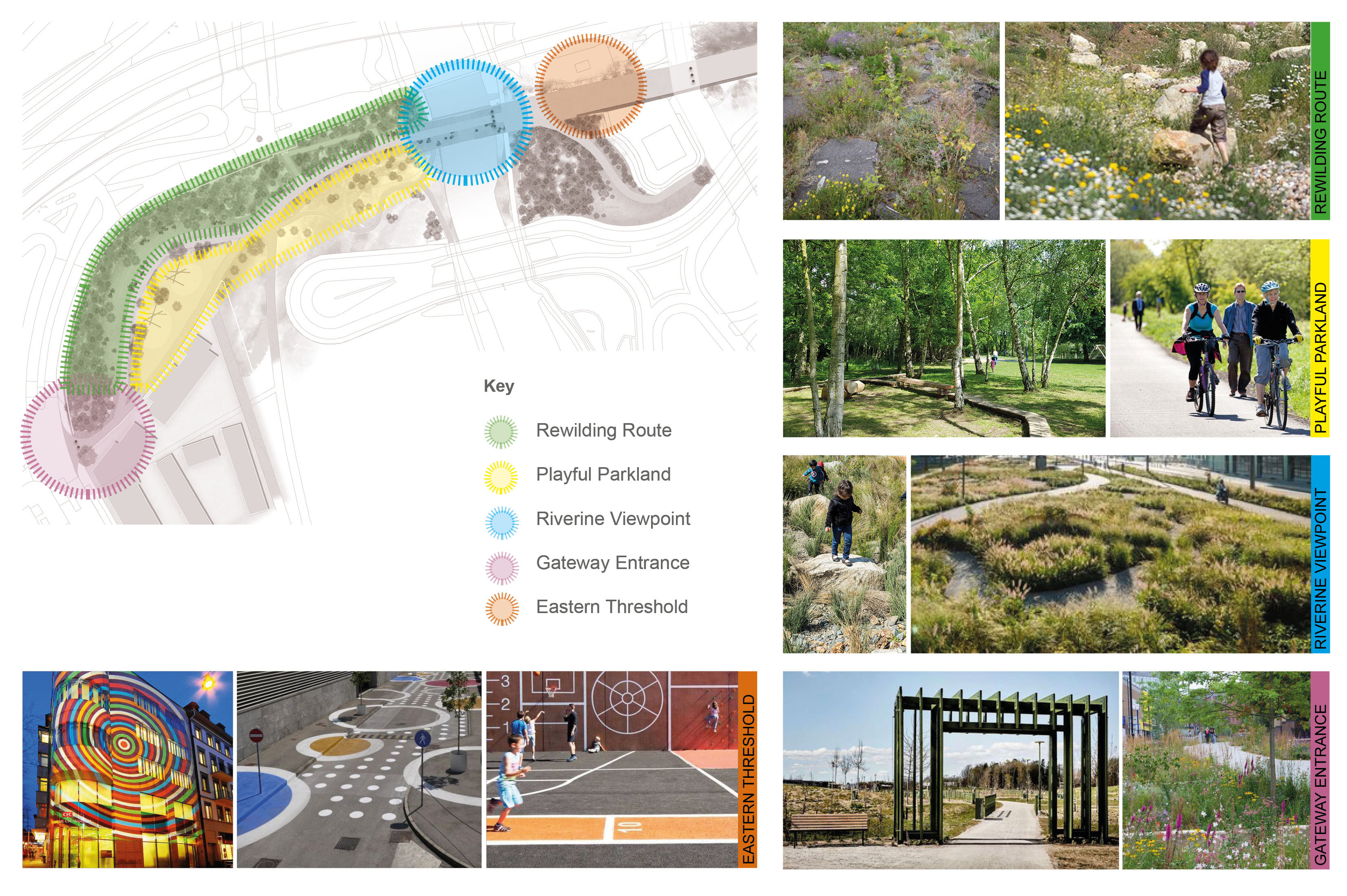
 Figure: Northwall Road Design Strategy
Please find the detail of the proposals to date in the links on the right hand side of the page. To provide your view on the proposals, please provide feedback using the survey below by 24th November 2025, or get in touch via the contact details here: YourSay@QueenElizabethOlympicPark.co.uk

The initial sketch design for Northwall Road proposes a significant reduction in the existing carriageway to prioritise a single, primary pedestrian and cycle route linking Waterden Road to Eton Manor Walk. This route is framed within a green corridor, where the remaining carriageway and footpaths are transformed with soft landscape that introduces a variety of habitats including brownfield mosaic habitat, scattered tree and grassland habitats, and wildflower areas. This ‘greening’ continues across the existing River Lea bridge, creating an ecological corridor that strengthens habitat connections along the route. Formal and informal play opportunities are integrated throughout, encouraging movement, play, and exploration for a wide range of users. Secondary paths are maintained or introduced to improve connections between the River Lea and southern areas of Queen Elizabeth Olympic Park. A prominent gateway is proposed at Waterden Road with thresholds at Eton Manor Walk and below Eton Manor Walk bridge, serving as welcoming entrances and orientation points along the route.
A series of key character areas have been developed that illustrate how the different spaces could look, feel and be used for recreation.